
Insights from Caprock and Winged Keel Group
Tax management is central to preserving after-tax returns for all investors.
For ultra-high-net-worth families, however, the issue is especially important, with federal and state obligations often taking a substantial bite out of the income generated by personal investments. The challenge can be even more pronounced in trust structures, where compressed brackets push income into the highest federal rate at relatively low thresholds.
Over time, these taxes add up and affect an investor’s ability to accumulate and protect wealth. Private Placement Life Insurance, or PPLI, is one way families can address these issues head-on.
PPLI is a type of variable life insurance designed for qualified purchasers and accredited investors. It offers the tax advantages of life insurance along with access to a wide variety of investment options. When structured correctly, PPLI can improve after-tax returns, help insulate certain investments from taxes and deliver tax-free insurance benefits to the next generation.
How PPLI Works
PPLI is different from traditional life insurance. It is a private contract, usually funded with large premiums over several years.
The premiums are invested within the policy using Insurance-Dedicated Funds (IDFs) or Separately Managed Accounts. These options are built for insurance platforms and must follow specific tax and regulatory rules. The main benefit is that investment growth is tax-deferred.
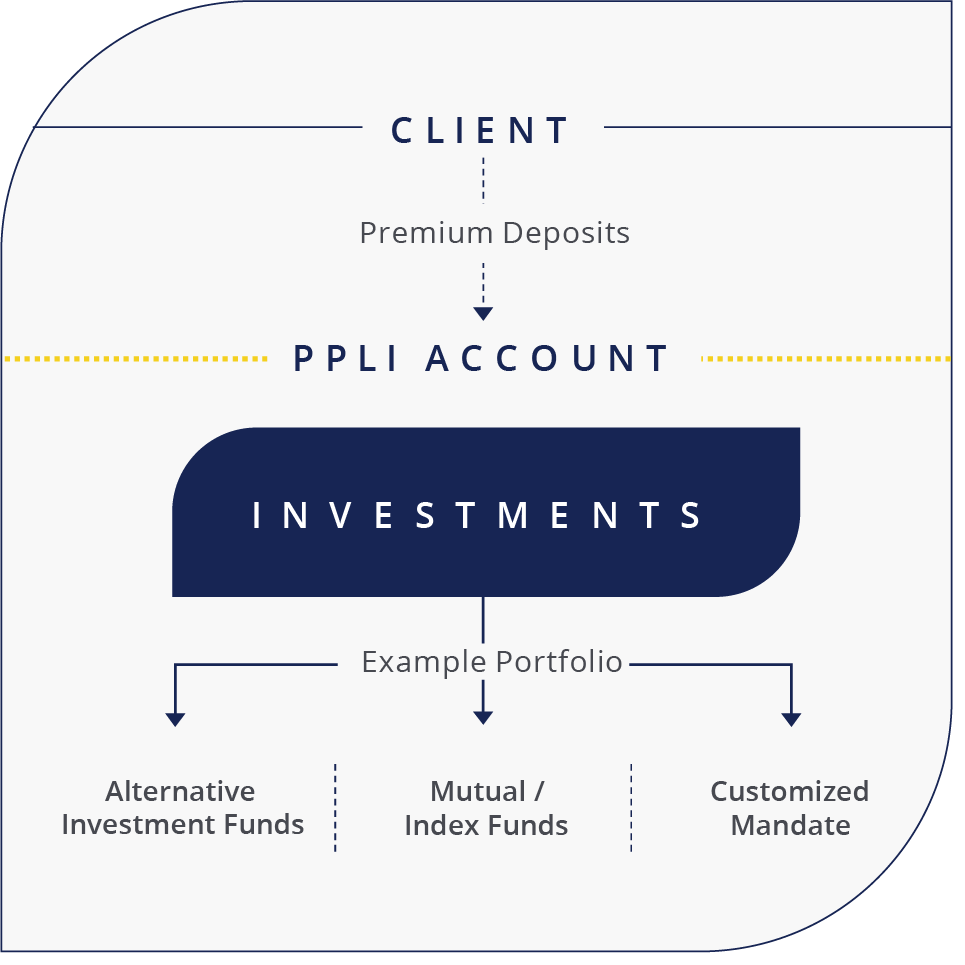
Structure for illustrative purposes only.
This structure also gives investors more flexibility within the policy. Allocations can be rebalanced among available funds without triggering current income tax, so there is no capital gains hit when managers change investments and no annual tax bill tied to short-term trading. Instead, growth remains inside the policy, where it can continue compounding over time.
If liquidity needs arise, it is possible to access about 85% of a PPLI policy’s value during the insured’s lifetime, without triggering income tax, through withdrawals up to basis and properly structured policy loans. When the insured passes away, the life insurance benefit, including any gains, goes to beneficiaries tax-free. If a properly structured trust owns the policy outside the taxable estate, the insurance benefit can also avoid estate taxes.
Why It Matters for Ultra-High-Net-Worth Families
Most investors understand that taxes can slow investment growth. Many do not appreciate just how much.
Think about a portfolio that mostly generates ordinary income and short-term gains. After federal and state taxes, along with nondeductible investment management fees, a significant share of that return, often 300-400 basis points, may disappear each year. Over decades, that annual drag can meaningfully slow wealth accumulation.
Inside a typical PPLI policy, by contrast, investments grow on a tax-deferred basis for an annualized cost of approximately 40-60 basis points. Over time, the difference in drag produces a materially different result. PPLI can deliver 2x – 5x more value than a taxable account depending on the return and tax assumptions.*
PPLI tends to get the most attention when families are dealing with three issues, sometimes all at once:
Trust planning. PPLI can be useful in both grantor and non-grantor trusts, where taxes can weigh heavily on investment income. Used well, PPLI can reduce that drag, support long-term compounding and give trustees more flexibility around distributions.
Wealth transfer. PPLI can also help families move wealth more efficiently. Because the insurance benefit paid at the passing of the insured is generally income tax-free, it can provide liquidity for heirs without forcing the sale of other assets. That can be even more valuable when a properly structured trust owns the policy outside the taxable estate.
Alternative investments. The appeal often becomes clearest with hedge funds, private credit and other tax-inefficient strategies. Holding those allocations inside a PPLI policy may reduce annual tax drag and allow more of the return to stay invested and compound.
That said, PPLI is not a fit for every investor. It works best for families with a longer time horizon, meaningful exposure to tax-inefficient strategies and a need for coordination across investment planning, trust planning and wealth transfer.
The Investment Landscape Has Evolved
PPLI has become more popular in recent years as more investment options have become available.
Public industry sources indicate that more than 750 Insurance-Dedicated Funds are available across the market, with roughly 250 in alternative strategies. These include hedge funds, private markets, credit, multi-manager platforms and other institutional approaches, alongside a broad lineup of traditional registered funds.
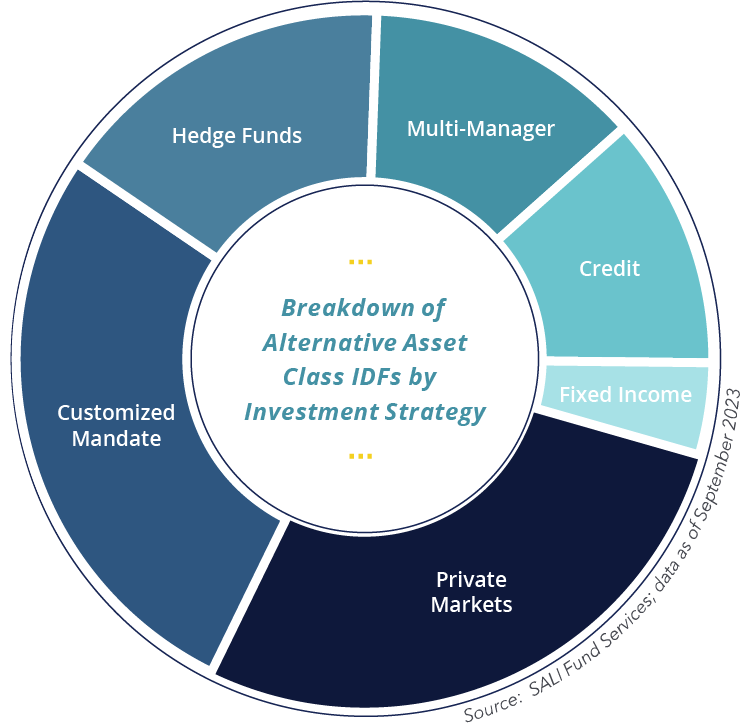
Some insurance companies now allow custom investment strategies through Separately Managed Accounts. This gives families more flexibility to align the policy’s investments with their overall portfolio while still complying with tax and governance rules.
Investments within the policy can be changed without triggering a tax event, provided the rules on diversification and control are followed. This flexibility, along with tax deferral, is part of what makes PPLI appealing.
Caprock + Winged Keel Group: An Integrated Approach
PPLI requires coordination across investment management, insurance structuring and tax planning. That is why Caprock works in strategic partnership with Winged Keel Group.
We bring deep experience in asset allocation, manager selection and portfolio construction for ultra-high-net-worth families. Complementing that work is Winged Keel Group, an independent life insurance brokerage firm with decades of experience structuring and administering customized life insurance portfolios for complex estates. Together, we offer:
- Open-architecture access to the full PPLI ecosystem, including all major insurance carriers active in the space and a broad range of IDFs and customized mandates
- Institutional pricing arrangements designed to secure competitive policy costs
- A coordinated underwriting and implementation process, including a structured risk-classification review to optimize insurance pricing
- Investment selection and portfolio construction
- Ongoing monitoring of both the insurance contract and the underlying investment portfolio
Our role is not just to help put a policy in place. It is to assess whether PPLI makes sense within a family’s broader balance sheet and estate plan. In some cases, the answer is yes. In others, the associated costs, optimal time horizon or desired investment strategy may make a different approach more appropriate.
Independence matters. We are not tied to one carrier or platform. We look across the market and build solutions based on each client’s needs.
Is PPLI Right for You?
To recap, PPLI works best when several conditions are in place:
- A long-term investment horizon, often seven to 10 years or longer
- Exposure to tax-inefficient strategies that generate ordinary income and/or short-term capital gains
- Trust structures that would benefit from reduced income-tax drag
- A desire to create tax-free liquidity for heirs
PPLI is less useful for short-term investments or for investors who only invest directly in businesses that cannot be included in insurance-dedicated structures.
Every family’s situation is unique. The best way to determine whether PPLI is right for you is to engage Caprock in a review of your portfolio, tax situation and estate plan in detail.
Download our PPLI quick-start guide or speak with a Caprock advisor for more information.

Download our PPLI quick-start guide for more information.
"*" indicates required fields
*While the noted costs and results are typical, outcomes may vary based on factors specific to each client.
Private Placement Life Insurance and Annuities are unregistered products and are not subject to the same regulatory requirements as registered products. As such, Private Placement Life Insurance and Annuities can only be offered to accredited investors or qualified purchasers as described by the Securities Act of 1933.
©Caprock. All rights reserved. The Caprock Group, LLC (“Caprock”) is an SEC Registered Investment Advisor. This communication is not an offer or solicitation with respect to the purchase or sale of any security and is for informational purposes only. Information contained herein has been derived from sources believed to be reliable, but Caprock makes no representations as to its accuracy or completeness. Investment in securities involves the risk of loss. Past performance is no guarantee of future returns. Registration with the SEC does not imply a certain level of skill or training. Caprock, its Employees, Affiliates and Advisers are not tax or legal professionals and do not provide such advice. Therefore, the discussions contained herein are for informational purposes only and should not be construed as a recommendation or endorsement of a strategy. Please consult with your tax or legal professional for further guidance and information. Caprock invests client capital through a variety of structures, including blended vehicles and direct investments.