
When pacing, not timing, drives investment decisions
Years ago, one of our clients had the opportunity to become an early investor in SpaceX. They passed.
They did not pass because they doubted the business or lacked access. Instead, they had already invested most of their capital elsewhere. Many investors overlook the importance of vintage year diversification in private markets.
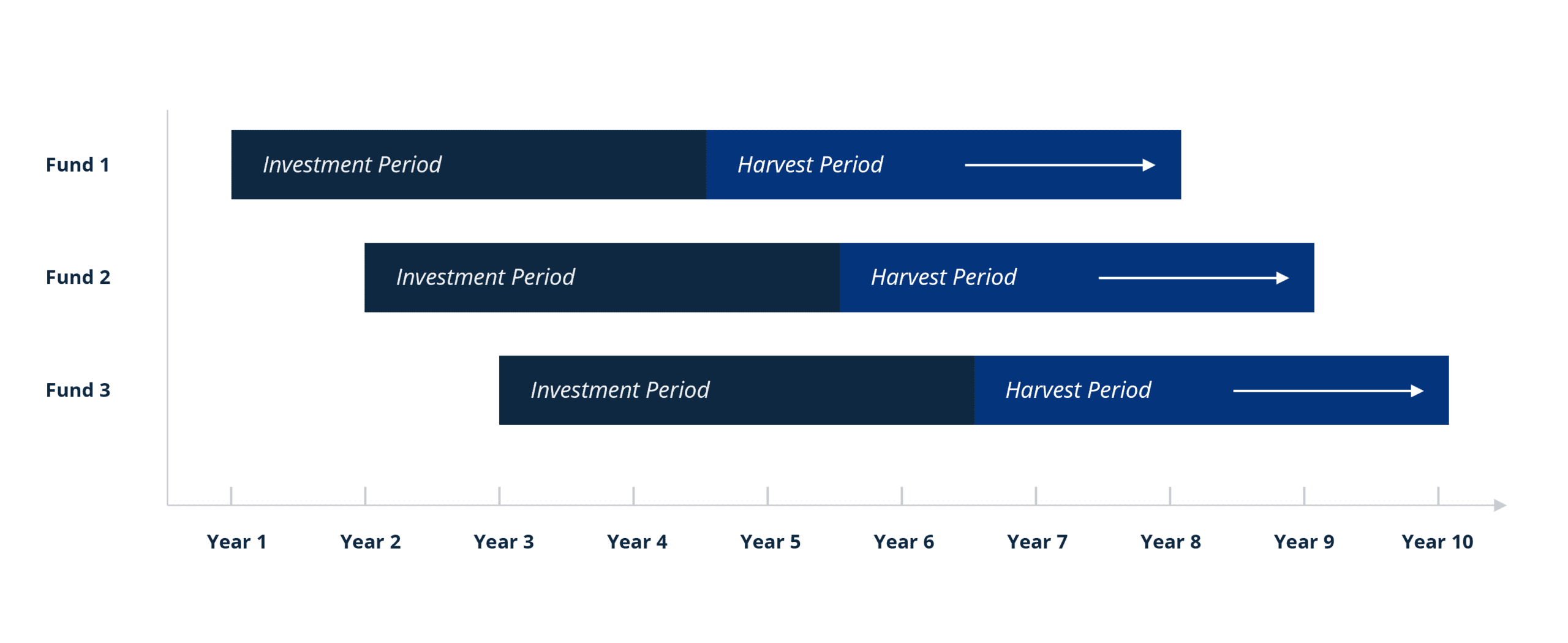
Vintage year diversification is the practice of committing to private market funds over multiple years rather than all at once. Because capital is locked up and exits cluster, pacing can help reduce the risk that one market cycle dominates outcomes.
Sometimes, the main question is not whether an opportunity is attractive. It is whether the portfolio has enough room to take advantage of it. This is why structure is just as important as selection in private markets because commitments are illiquid and capital calls can be unpredictable.
Private Markets Work Differently
In liquid markets, wealth managers can make changes. They can trim positions, help clients raise cash, or adjust exposure as conditions shift. If something goes wrong, they have choices.
That flexibility is very limited in private markets. Once investors commit capital, it is usually locked up for years, sometimes over a decade. Early decisions do not just influence outcomes. They shape them completely.
This is why vintage year diversification should be central to a private market investing playbook. The main idea is pacing. Investors commit capital over multiple years instead of building a full private markets portfolio all at once.
This approach changes how a portfolio develops. For example, a fund from 2021, 2024 or 2027 will each face different valuation environments, economic backdrops, and exit conditions. Each vintage year reflects a unique market environment.
In some years, investors put money to work in strong markets when there is plenty of capital and prices are high. In other years, they may find better opportunities because there are fewer buyers competing for deals.
No one can time the market perfectly, but that is not the main goal. The aim is to avoid letting any single moment have too much influence.
Why Pacing Matters in Private Markets
The same discipline is important when it is time to sell. Investors who commit all their capital at once may see those investments mature together, leaving them exposed to a single exit window.
If the overall market is weak at that time, the portfolio may have few options. A structured investment schedule can help avoid this problem. As lockups end over time, investors gain more flexibility in when and how they take profits.
The same thinking applies as new opportunities appear. A pacing strategy leaves space for future opportunities. Private markets can shift quickly in just a few years. A company that was not investable, available or even well-known at the start of one cycle can become a top performer in the next.
This is why investors need to keep some flexibility. If they invest too much too soon, they might end up on the sidelines when the next big opportunity comes along.
This point is important and brings us back to the start. When investors miss a chance like SpaceX, it is easy to question the decision. Often, the real issue is practical, not analytical. The capital is not available when needed.
A paced approach helps prevent this. It keeps capital moving. Some investments are still being made while others start to return capital, creating a cycle that supports ongoing reinvestment. Over time, this steady rhythm becomes an advantage.
Build Vintage Year Diversification with Intention
While investing across vintages addresses several risks, it does not eliminate concentration risk altogether. Diversification within each year still matters, since putting too much capital with one manager, sector or strategy can create its own set of problems.
Tradeoffs and limitations
- It does not eliminate loss risk. Vintage year diversification can reduce reliance on a single cycle, but any given fund or company can still underperform.
- It does not make private markets liquid. Capital calls and distributions rarely follow a neat schedule, particularly when exit markets are constrained.
- It is not a substitute for manager and strategy diversification. Overweighting one GP, sector, or approach can dominate outcomes even with multi-year pacing.
- It requires commitment capacity and discipline. A plan only works if investors can follow it through shifting market narratives—without overcommitting at peaks or retreating in down points.
- Reversibility is limited. Secondary market sales can create flexibility, but pricing and timing are uncertain and often least attractive when liquidity is most valuable.
The idea is not to spread capital too thin. It is to give the portfolio more chances to succeed and avoid relying too much on any single outcome.
None of this happens by chance. A private market pacing framework sets out how much capital to commit each year, how long the portfolio stays in buildout mode and how private markets fit into the overall allocation.
A good framework also puts uncalled capital to work. In most cases, investors can keep that money in public markets or fixed income until it is needed. This structure matters most when conditions are uncertain. Volatility often pushes investors to extremes, with some rushing to invest and others pulling back completely.
Both can hurt long-term results. A pacing framework offers a steadier path, keeping capital moving without letting short-term volatility control the whole strategy.
In the end, private markets do not reward investors for perfect timing. They reward those who build processes that work well in a dynamic marketplace.
Vintage year investing is an important example of this approach. It spreads exposure over time, diversifies entry and exit conditions and keeps the portfolio flexible for future opportunities.
Just as important, vintage year diversification helps make sure that when the next big opportunity like SpaceX comes along, the question is not about access. It is whether you are ready to act.
Learn more about vintage year private investment opportunities.
©Caprock. All rights reserved. The Caprock Group, LLC (“Caprock”) is an SEC Registered Investment Advisor. This communication is not an offer or solicitation with respect to the purchase or sale of any security and is for informational purposes only. Information contained herein has been derived from sources believed to be reliable, but Caprock makes no representations as to its accuracy or completeness. Investment in securities involves the risk of loss. Past performance is no guarantee of future returns. Registration with the SEC does not imply a certain level of skill or training. Caprock, its Employees, Affiliates and Advisers are not tax or legal professionals and do not provide such advice. Therefore, the discussions contained herein are for informational purposes only and should not be construed as a recommendation or endorsement of a strategy. Please consult with your tax or legal professional for further guidance and information. Caprock invests client capital through a variety of structures, including blended vehicles and direct investments.