
Aligning Capital with What Matters Most by Caprock
From Values to Strategy: Turning Purpose into Measurable Outcomes
Impact investing helps investors pursue measurable social or environmental outcomes alongside competitive financial returns. Despite the concept being around for centuries and gaining mainstream acceptance over the years, it still feels vague to many people.
Is it just ESG? Does it mean generating concessionary returns? To clarify what impact is—and, just as importantly, what it isn’t—let’s start with the fundamentals and explore how impact can be integrated into a broader portfolio.
At its core, impact investing is a way to bring a person’s financial life into closer alignment with what matters most to them.
Impact Investing vs. ESG
One of the most common sources of confusion is the difference between ESG and impact investing. Put simply, ESG is focused on minimizing harm or managing risk in how a company operates, while impact investing seeks to support positive solutions to social or environmental challenges. The two can overlap, but they are distinct approaches.
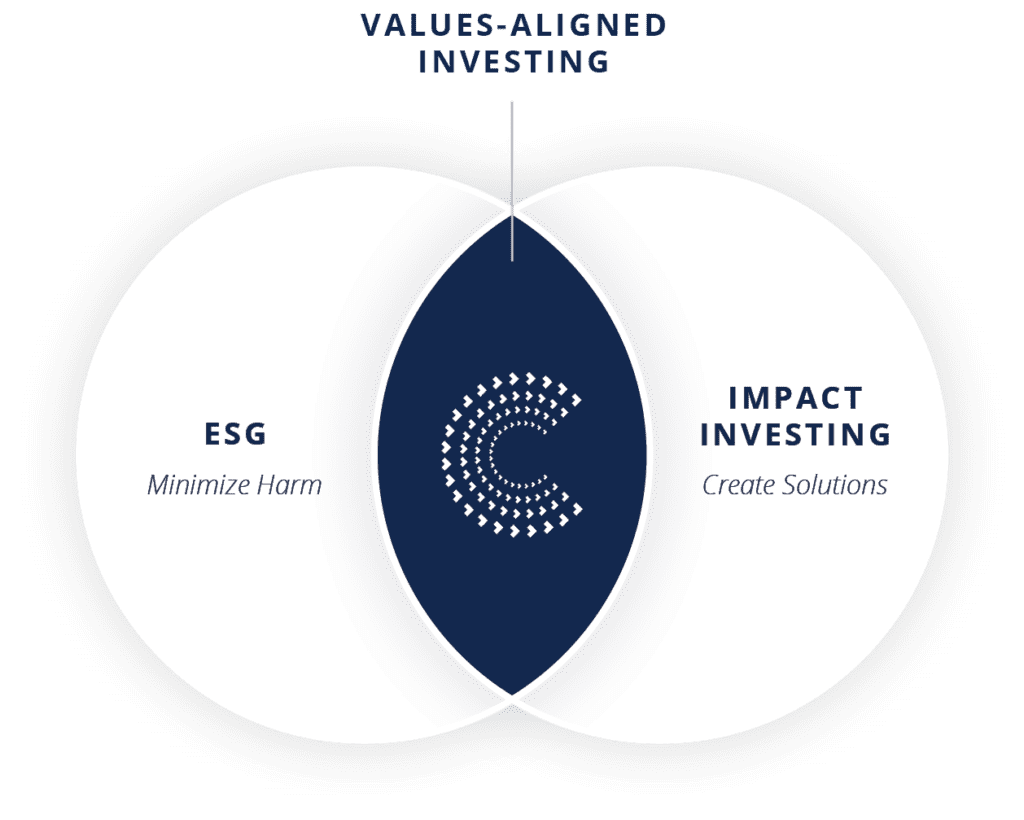
ESG, which stands for environmental, social, and governance, is a method for evaluating how responsibly a company is managed. It often focuses on identifying and managing risks related to those factors.
For example, how does a company treat its employees? Could the way it operates create environmental problems that become financial liabilities? How diverse is its leadership? These factors can affect financial results and are now often part of standard investment analysis.
Impact investing differs in that it focuses on what a company’s strategy includes, such as its products, services and the problems it aims to solve, such as expanding healthcare access, building affordable housing, or reducing carbon emissions.
What Impact Can Look Like
Impact investing is not a single approach. It covers a wide range of strategies, usually centered on social or environmental outcomes.
On the social side, people may focus on areas like education, job training, healthcare, affordable housing or financial access. On the environmental side, they might consider clean energy, decarbonization or land conservation.
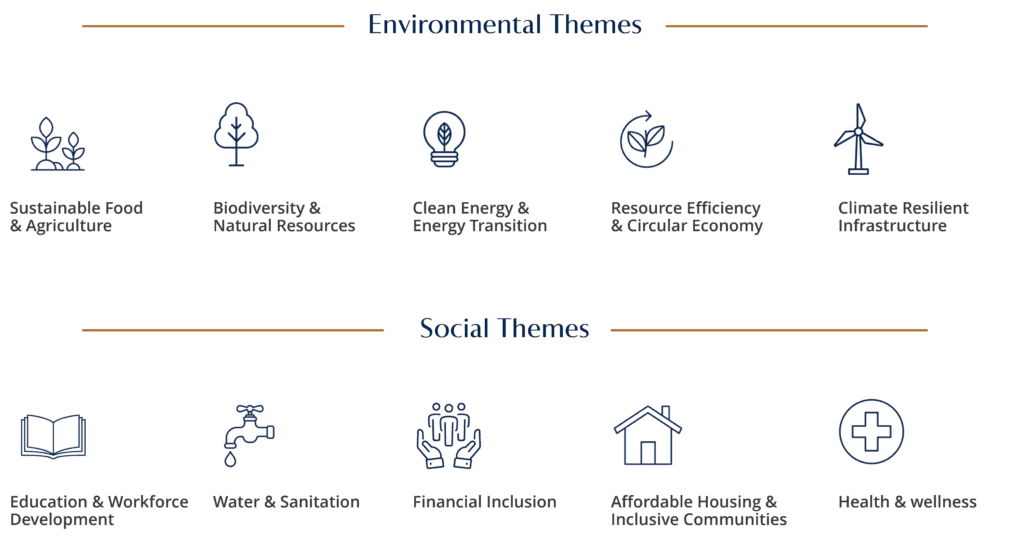
Importantly, impact investing is personal. One family may focus on underserved populations. Another may prioritize climate. Someone else may invest through a faith-based lens. And there are others who know they want alignment with their values but haven’t yet narrowed the themes and outcomes they want to support. What matters isn’t that every family starts from the same place; it’s that the strategy fits their priorities.
That is why impact investing starts with a conversation. It begins by identifying which issues, outcomes or communities matter most to the person putting capital to work.
A Common Misconception: Does Impact Mean Lower Returns?
Some believe impact investing generates lower returns.
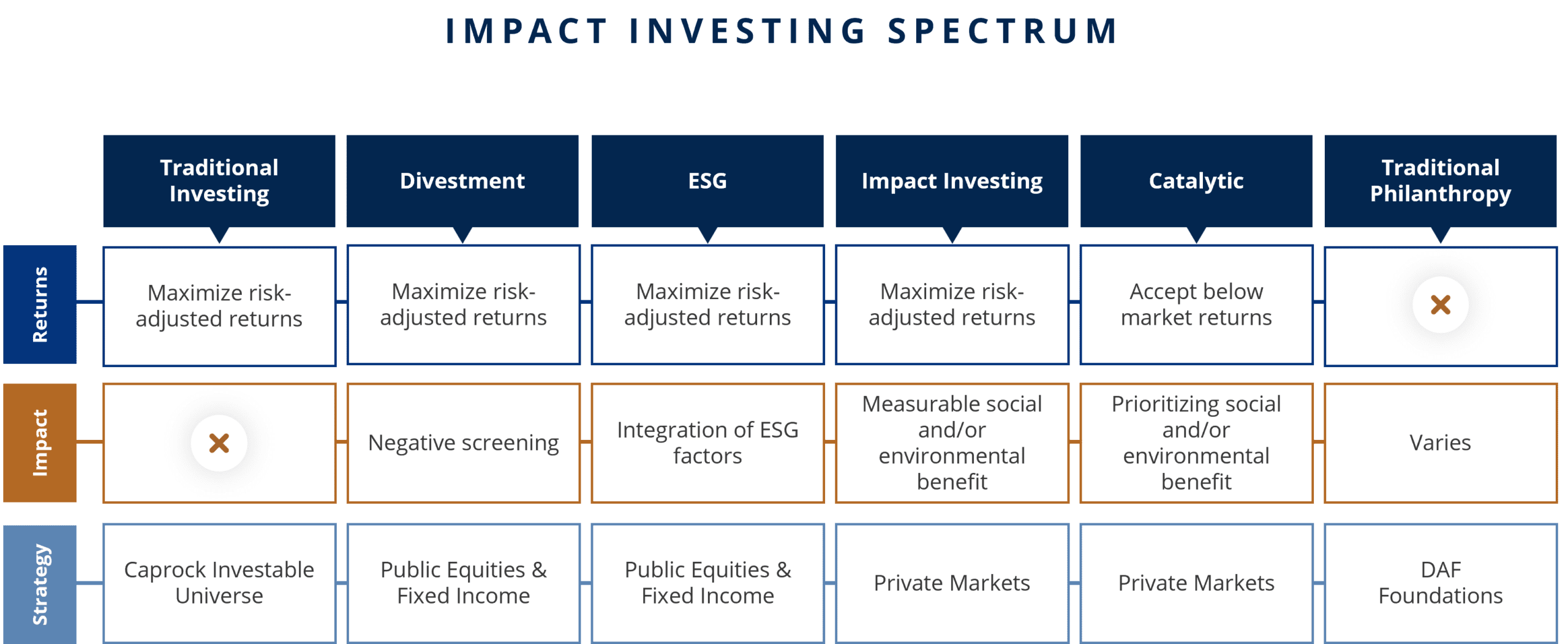
It is true that impact investing spans a range of approaches. At one end of the spectrum is traditional philanthropy, where financial return is not the goal. At the other end is investing designed to generate market-rate returns while also advancing a family’s values. In the middle is catalytic capital, which may accept lower returns to support social or environmental progress.
As with any strategy, expected returns depend on the asset class, manager, fees, and structure. To that end, impact opportunities go through the same due diligence and investment committee process as any other strategy on the Caprock platform. The objective is not to choose between performance and purpose. It is to integrate the two thoughtfully. High-net-worth families often participate in multiple strategies across the impact spectrum.
Clarifying What Matters Most
Many people start exploring impact investing with several ideas instead of one clear goal. As time goes on, these ideas usually become more focused.
This ‘narrowing’ process is normal. People often begin with a general wish to match their investments to their values, but as they reflect and learn, their goals become more specific and meaningful.
For example, a client might start with a broad desire to invest according to their values. In early talks with Caprock, they discuss different interests, including issues that deeply resonate, what changes feel important and where they feel personally connected. As these conversations continue, clear patterns and priorities often appear.
In this sense, impact investing is not about having the perfect answer right away. It is more about finding clarity as you explore your options.
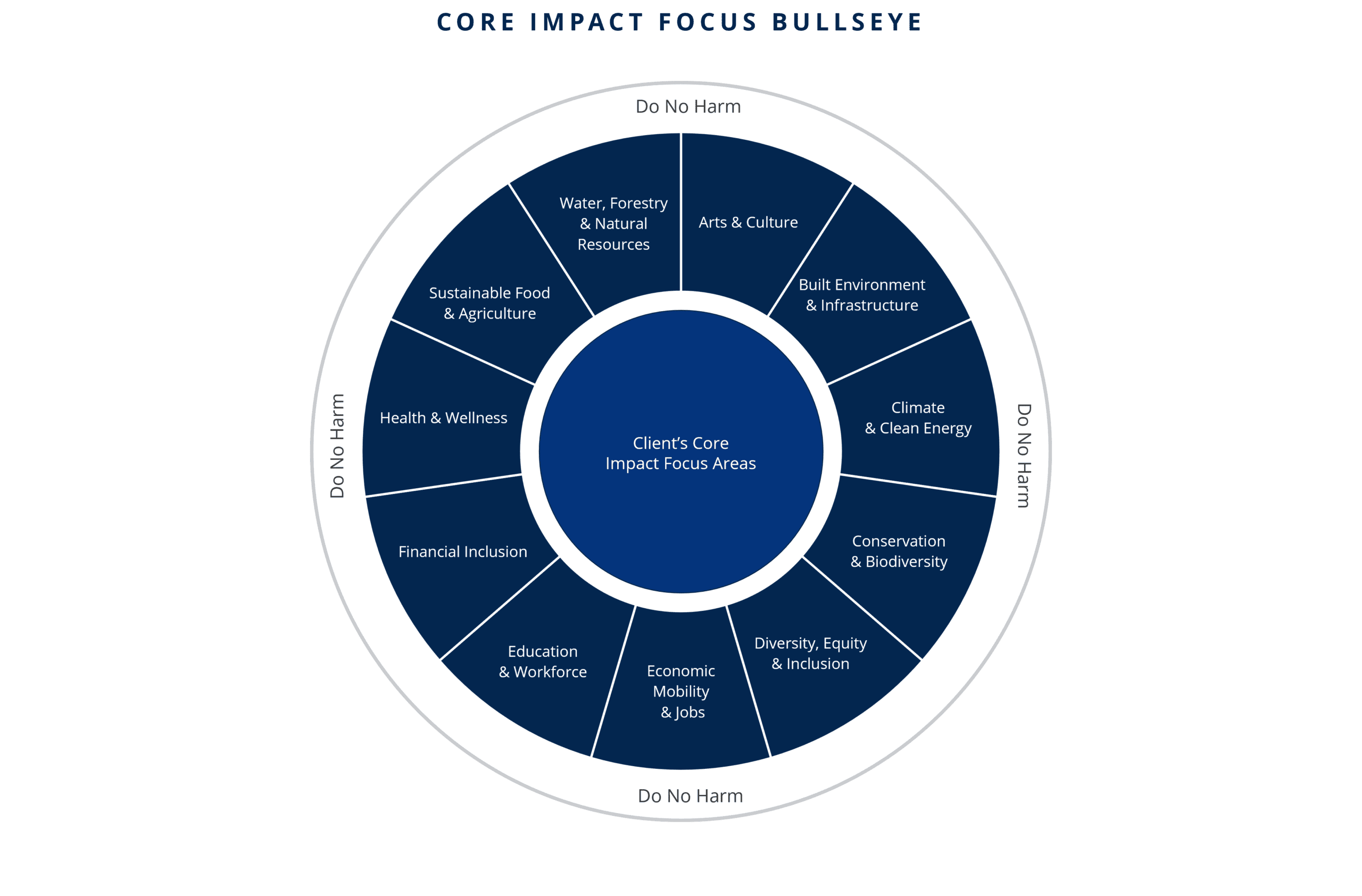
A helpful way to picture the process is as a bullseye. The center is the issue you care about most, and the surrounding rings are related themes that also support your main goal. Often, working on these related areas can help you make progress on what matters most to you.
From Values to Integrated Impact Investment Strategy
Impact investing does not change the basics of portfolio construction. Diversification, risk management and thoughtful allocations still apply.
What changes is how those principles are expressed within the context of a client’s broader portfolio. Some families and foundations align an entire portfolio with impact goals, while others dedicate only a portion of assets to those strategies or carve out a sleeve around a specific theme. In either case, the approach should reflect the client’s full investment strategy, including financial objectives, liquidity needs and risk tolerance.
Those opportunities can span both public and private markets. Public markets often provide values alignment through ESG strategies and shareholder advocacy. Private markets can offer more direct exposure to impact themes such as healthcare, education and the environment.
How Impact Is Measured
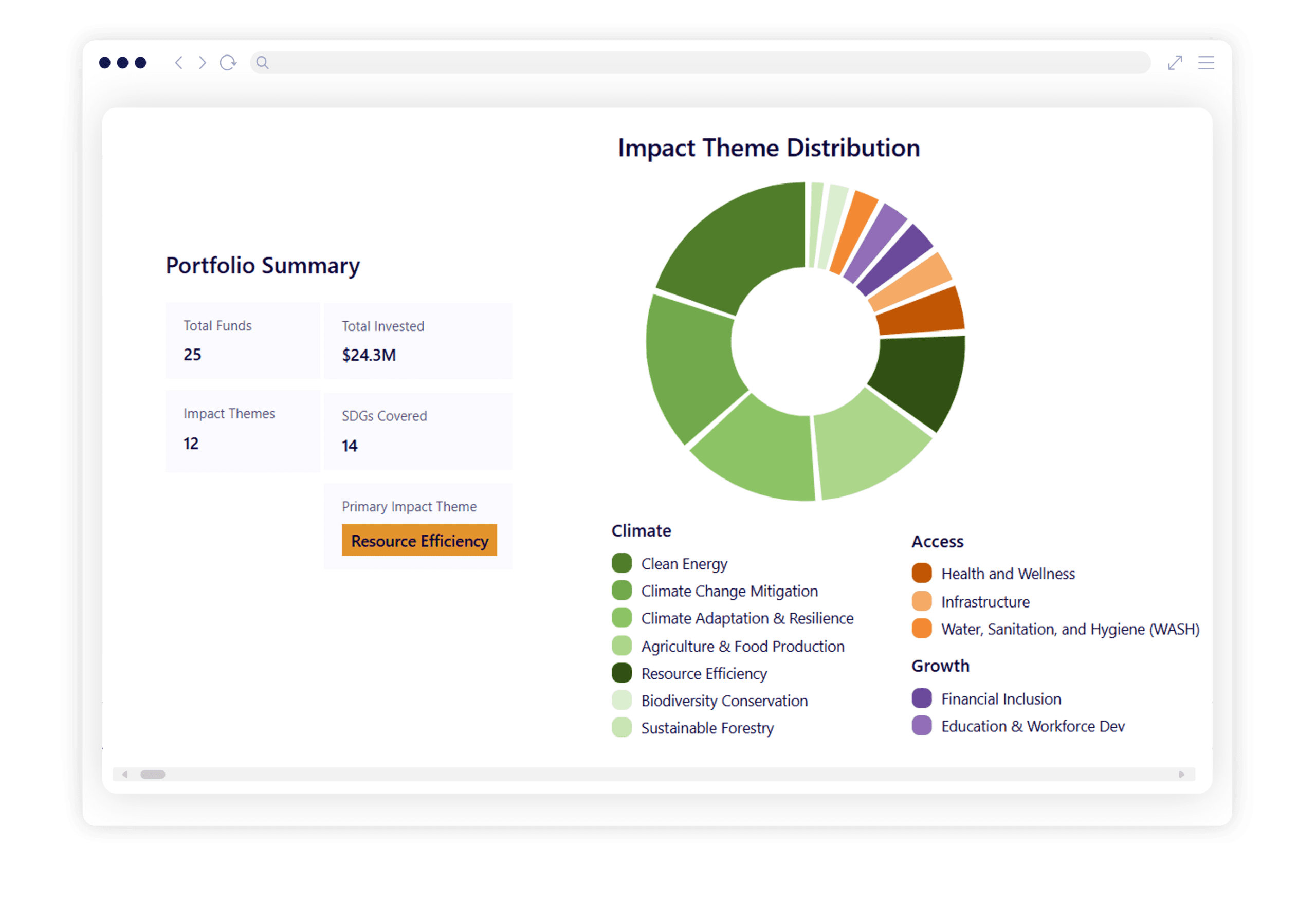
For those seeking to effect change, Caprock evaluates impact by setting clear impact objectives at the outset. The structure involves confirming what a manager will measure and reviewing results over time alongside financial performance. Clients and managers can use impact reporting tools to see clear numbers and results related to their strategy, like how many emissions were avoided, housing units were created, patients were served, or students were reached.
Measurement turns impact from an aspiration into something concrete. Because impact data quality can vary by asset class and manager, we also consider the limitations of each metric and focus on transparency and consistency in reporting.
At Caprock, that accountability is a requirement. Managers are expected to articulate impact objectives and report progress. The reporting data from each manager is accumulated and tracked across the client’s full portfolio for ongoing monitoring of the progress.
Just as financial reporting helps demonstrate investment performance and returns, impact reporting helps demonstrate the social or environmental outcomes an investment helped support. Together, both forms of reporting help track progress over time.
Example Impact Report for Illustrative Purposes Only
Getting Started
For those new to impact investing, one of the most important and often challenging steps is to clarify what matters most to you. Many people begin with broad values or a general desire to align their capital with what they care about. This process can take time, reflection and conversation to turn those instincts into a clear investment strategy.
- Is the goal broad alignment between your capital and your values, or a more targeted focus on specific outcomes?
- How should impact fit within your broader financial plan?
- How will you ensure accountability and avoid “impact-washing”?
Impact investing is not a one-time choice. It evolves as priorities shift and new opportunities emerge. Engage the support of an advisor with impact experience who can help you explore the range of opportunities and establish a plan to evolve your allocations aligned with your values, liquidity needs, and risk tolerance. You can start with a small percentage of your investments in two or three themes or be more aggressive and dedicate a larger percentage. The decision is up to you.
When approached thoughtfully, it allows capital to do more than generate returns. It allows a portfolio to reflect personal values as well.
In a world where more people want their capital to reflect their beliefs, aligning investments with those values is often the main focus.